Tuesday, January 11, 2011

Script to get the last update statistics date


Below script will execute against the sys.Objects,sys.indexes and sys.stats. Script will return last statistics update date and meta data of  statistics. Script will return the result for table and view level statistics.

In this script I have used the function STATS_DATE which will return last updated statistics date.

Syntax
STATS_DATE ( table_id , index_id )

SELECT sysobj.name AS objectname,
sysindex.name AS indexname,
Stats_date(sysindex.[object_id], sysindex.index_id) AS
[Statistics Update Date],
CASE sysstats.auto_created
WHEN 0 THEN 'No'
WHEN 1 THEN 'Yes'
END AS
isstatscreatedbyqueryprocessor,
CASE sysstats.user_created
WHEN 0 THEN 'No'
WHEN 1 THEN 'Yes'
END AS
isstatscreatedbyuser,
CASE sysstats.no_recompute
WHEN 0 THEN 'No'
WHEN 1 THEN 'Yes'
END AS
isstatscreatedwithnorecomputeoption
FROM sys.objects AS sysobj WITH (nolock)
INNER JOIN sys.indexes AS sysindex WITH (nolock)
ON sysobj.[object_id] = sysindex.[object_id]
INNER JOIN sys.stats AS sysstats WITH (nolock)
ON sysindex.[object_id] = sysstats.[object_id]
AND sysindex.index_id = sysstats.stats_id
WHERE sysobj.[type] IN ( 'U', 'V' )
ORDER BY Stats_date(sysindex.[object_id], sysindex.index_id);


SQL Server 2005/2008 Standard Reports

In the new versions of SQL Server Microsoft has included very useful standard reports. We can use these different kind of report for performance-tuning, activity monitoring, Query tuning, troubleshooting IO bottlenecks.

You can follow below steps to get the standard reports.
Right Click On SQL Server -> Goto Reports -> Goto Standard Reports


Monday, January 10, 2011

How can we export and import registered servers using SSMS?

In our organization we have number of SQL Server instances which are grouped by their Business Unit, Environment (PRD, DEV etc). For new joiners, it is hard to find out the list servers in absence of CMDB. As a solution, you can ask your team member to give you the list of registered servers by doing using server import/export option.

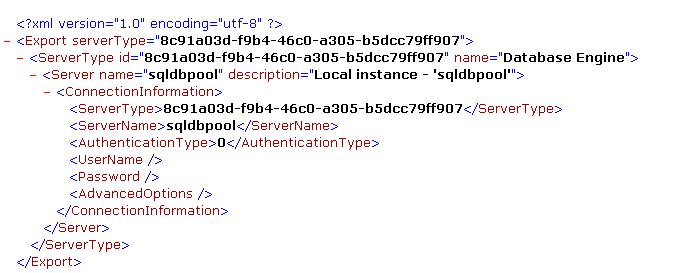
1. In Registered Servers, right-click a server group, and then click Export.See below image for more information.


2.In the Export Registered Servers dialog box, from the Server Group list select the location where you would like to save the registered server information, in the Export file box type a name for the exported file, and then click Save.


SQL Server will create the file with .RegSvr extension which stores server info in XML format.


In Registered Servers, right-click a server group, and then click Import and select the export file with .RegSvr extension. See below image for more information.

How to rename Column Name and Table Name?

We can use sys.SP_Rename procedure to rename the column and table in SQL Server.


CREATE TABLE empl
(
name VARCHAR(20),
remarks VARCHAR(100)
)


--syntax to rename column
EXEC sys.Sp_rename
@objname = 'table_name.old_column_name',
@newname = 'new_column_name',
@objtype = 'COLUMN'

--rename column example
EXEC sys.Sp_rename
@objname = 'empl.name',
@newname = 'empname',
@objtype = 'COLUMN'


--rename table name Old Table Name and New Table Name
EXEC sys.Sp_rename
'empl',
'empInfo'

EXEC sys.Sp_rename

Logical Joins and Physical Joins

Logical Joins: INNER JOIN, RIGHT/LEFT OUTER JOIN, CROSS JOIN, OUTER APPLY. This joins are written by the user.

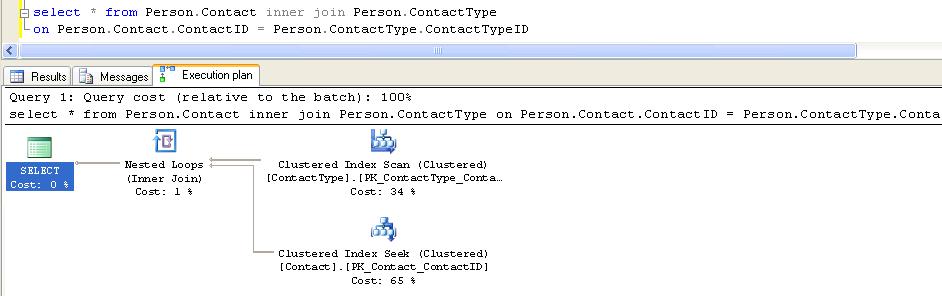
Physical Joins: Nested loop, merge join and hash join is common operators which we will see in execution plan as long as query contains any logical joins (inner join, outer join, cross join, semi join). These three joins are called Physical Joins.

In below example I have executed query against AdventureWorks database with Inner Join. You can see the Nested Join in Execution Plan.

Date Time Functions

CURRENT_TIMESTAMP()
Returns the current database system timestamp as a datetime value without the database time zone offset.

GETDATE ()
Returns the current database system timestamp as a datetime value without the database time zone offset. This value is derived from the operating system of the computer on which the instance of SQL Server is running.

GETUTCDATE()
Returns the current database system timestamp as a datetime value. The database time zone offset is not included. This value represents the current UTC time (Coordinated Universal Time).

SYSDATETIME()

Returns a datetime2(7) value that contains the date and time of the computer on which the instance of SQL Server is running

SYSDATETIMEOFFSET()
Returns a datetimeoffset(7) value that contains the date and time of the computer on which the instance of SQL Server is running with timezone offset.

SYSUTCDATETIME
Returns a datetime2 value that contains the date and time of the computer on which the instance of SQL Server is running. The date and time is returned as UTC time (Coordinated Universal Time).

SELECT SYSDATETIME()
----------------------
2011-01-10 06:38:25.05

SELECT SYSDATETIMEOFFSET()
----------------------------------
2011-01-10 06:38:25.0527369 -05:00

SELECT SYSUTCDATETIME()
----------------------
2011-01-10 11:38:25.05

SELECT CURRENT_TIMESTAMP
-----------------------
2011-01-10 06:38:25.050

SELECT GETDATE()
-----------------------

2011-01-10 06:38:25.050

SELECT GETUTCDATE()
-----------------------
2011-01-10 11:38:25.050

Note: Refer books online for more information.

Download and Install AdventureWorks Sample Database

Microsoft SQL Server Sample Database is moved to Microsoft's Open Source site of CodePlex.

You can download it from the below link.
http://msftdbprodsamples.codeplex.com/

Friday, January 7, 2011

How to Create Alias in SQL Server?

What is Alias?
A SQL Server alias is the user friendly name. For example if there are many application databases hosted on same SQL Server. You can give the different alias name for each application. Simply Alias is an entry in a hosts file, a sort of hard coded DNS lookup a SQL Server instance.

You can create Alias from Configuration Manager.

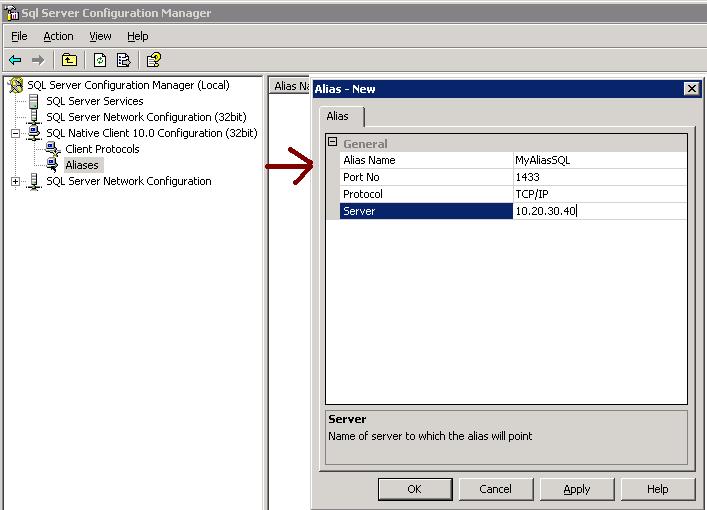
Go to SQL Server Configuration manager - Go to SQL Native Client -> Right Click and SELECT New Alias from the popup window.

Alias Name -- Alernative name of SQL Server
Port No -- Specify the Port No
Server - Mentioned the Server Name or IP address

Make sure On a 64-bit system, if you have both 32-bit and 64-bit clients, you will need to create an alias for BOTH 32-bit and 64-bit clients.


Thursday, January 6, 2011

Identify Objects Type using sys.SysObjects

Today I received an email from my one of blog reader regarding identification of different objects using Sys.sysObjects.

You can query the sys.SysObjects to get all the objects created with in the database.
Example

SELECT *
FROM   sys.sysobjects
WHERE  TYPE = 'u' 


Below are the different kind of object you can retrieve from database.


Object Type Abbreviation
AF = Aggregate function (CLR)
C = CHECK constraint
D = Default or DEFAULT constraint
F = FOREIGN KEY constraint
L = Log
FN = Scalar function
FS = Assembly (CLR) scalar-function
FT = Assembly (CLR) table-valued function
IF = In-lined table-function
IT = Internal table
P = Stored procedure
PC = Assembly (CLR) stored-procedure
PK = PRIMARY KEY constraint (type is K)
RF = Replication filter stored procedure
S = System table
SN = Synonym
SQ = Service queue
TA = Assembly (CLR) DML trigger
TF = Table function
TR = SQL DML Trigger
TT = Table type
U = User table
UQ = UNIQUE constraint (type is K)
V = View
X = Extended stored procedure